Category: amputee

  • Corona Diary: Social

    SIP Day 64, wearing a black tank and brown linen pants; 85 degrees outside; writing from the living room sofa before I head to bed.

    Today held lots of socializing:

    • A socially-distant in-person dropoff of tomato plants that I grew from seed, to a friend
    • A neighbor dropping in to chat about sourdough starter with Stijn, and to share some special flour
    • A phone call with a Quaker-Friend
    • A breakfast conversation with my daughter

    I also got several tasks completed on my To Do list:

    • stripped, sanded, stained, and applied a new coat of varnish to the wooden handle of my favorite canoe paddle
    • cleaned, sanded, and applied a coat of varnish to our outdoor dining table
    • graded most of the final assignments for History class I taught this past Spring
    • chatted with Stijn about some garden priorities while he fixed the sprinklers and hand-watered the tomatoes with fish emulsion

    Thirty-six years ago today I learned that I had osteosarcoma and that my leg would be amputated. I still remember laying awake in bed that night, so many thoughts running through my head and not being able to sleep. I snuck back out of bed and wrote and wrote in my diary until my handwriting got big and loopy and drifted off the page. It was such overwhelming and impossible-to-believe news then and now when I think about it, it still seems too sad and hard to have actually happened to me.

  • Hard Things

    Hard Things

    Two years ago, after my canoe trek in the wilds of British Columbia, I realized something about myself that has become something of a mantra to me in the meantime:

    I like to do hard things

    And this is what I was repeating in my mind last night as I sat alone at home listening to porting rain and thunder and wondering if it was worth keeping the commitment I’d made to race in my one-person canoe this morning. Because, for all the many hours that I’ve spent out on the water on my canoe, I’ve never actually raced on it. And so I when I registered for the “Off Da Couch” race a few weeks ago, I was actually on half-sure that I would follow through. Not only is racing hard work, but it’s so different than setting out for a solo Lido loop where I can go at my own pace and avoid everyone else.  Racing puts you into a pack of boats and you need to be aggressive (i.e. hold your line even when others are around you) rather than go the long way around anyone else. I’m not particularly good at being aggressive and I loathe when others cut in front of me and put me at risk of capsizing. And of course deep down I was wondering if I had the courage to deal with the fact that I could possibly be DFL if I were to race…

    But I did it.

    I wasn’t last place and I did cut someone else off around a turn but it wasn’t intentional (I apologized even as he cursed me). I came in 3rd in my division (Masters) and smack-dab in the middle of the pack of racers. Perhaps my brightest moment during the race was in the last third where everyone else was obviously tired out, but I got my second wind.  I was right between two other women on canoes and I realized that being the middle I was going to get sandwiched and I considered putting my paddle into the water to stop my boat from being squeezed and let them go ahead.  But instead I turned on my power, paddled super-hard for about 45 seconds and zoomed between and past both of them. That felt pretty good.

    But besides the logistics of the race itself, there’s one more part of this story I need to tell.  Eight years ago I bought my one-man canoe with a little bit of money that I inherited from my grandmother.  The canoe was used, but sturdy and lightweight, and I knew when I saw her that she was just perfect for me. However, it was an OC-1 canoe, which was steered with foot pedals. I knew I couldn’t steer it with the pegleg I wear on my right side in the water, so I brought my boat to Sam Couch who had a repair shop at the Newport Aquatic Center (NAC), and asked him for some help in modifying it to meet my needs.  We talked through a few strategies for re-routing the steering and he made a few other fixes (including a rudder upgrade) to the boat so it would suit me well. In the years since it’s been perfect for me and all my miles of solo paddling, and of course I’ve never forgotten Sam’s helpfulness and creativity in making my boat work just right for me. So it was a privilege to paddle in today’s race, which was named in his honor for all of his contributions to the NAC and the outrigger community over the years. Paddling has been my primary physical outlet through so many hard times and I am so very fortunate to have a vibrant community (NAC, ImuaOCC, OffshoreOCC, SCORA, etc) to support me.*

    *hats off to my Offshore teammates Mark and Bob who helped with transporting my boat to the race, too!


  • sweat

    sweat

    photo of two feet, one is normal and one is roboticWhile boarding a plane in Dallas last week a man stopped me and asked if I was an amputee. This question, asked by a stranger, often makes me wary.  My reflex is to cut off contact with the stranger as soon as possible because it’s my experience that I will then be stuck listening to that person tell me about every amputee that they know and about every news story that they’ve seen about amputee Olympians.

    This time, though, went a bit different. Rather than explaining his question, he pulled up his pantleg and showed me his hardware. We were two of a kind. We spoke in our own lingo, confirmed that we were both RAKs and started talking technology. He has the latest and greatest knee, one that I will never qualify for because they are only available to ex-military. I had to stifle the urge to run my hand along his calf as I admired the sleek look of his knee and ankle joints.

    We walked on to the plane and found we were seated a few rows apart. We kept talking, standing in our seats and speaking across the seats that divided us.

    Two minutes in and we were talking sweat. He lives in Texas and I in SoCal. We agreed that there was no technology that could help as walk better as long as there was sweat–it causes our prostheses to slip and twist and slowly slide off of our bodies.

    “I pour out cupfuls every day,” he said.

    “Me too, and no prosthetist really listens to that issue, they keep telling me that if I was wearing my leg correctly, I shouldn’t be sweating so much,” I shared.

    As the plane filled I shared with him my best advice, these spendy sweat blocker towlettes that I order online and that made walking in Rome and Pompeii possible. I also use them when we have a heatwave, which allows me to survive the workday without having to pour sweat out of my socket every few hours. He hadn’t tried them, but he said he would.

    We exchanged business cards and promised to keep in touch.

    I turned around and sat down.  As I fastened the belt and adjusted the position of my fake foot underneath the seat in front of me, I marveled at how satisfying it is to be seen by someone who lives life like me. I don’t even remember his name now, but we shared more in that brief conversation than I have with many people close to me. And somehow it’s a comfort to know that my problems with sweat aren’t just mine, but that he shares them.

    Save

  • anniversary #33

    anniversary #33

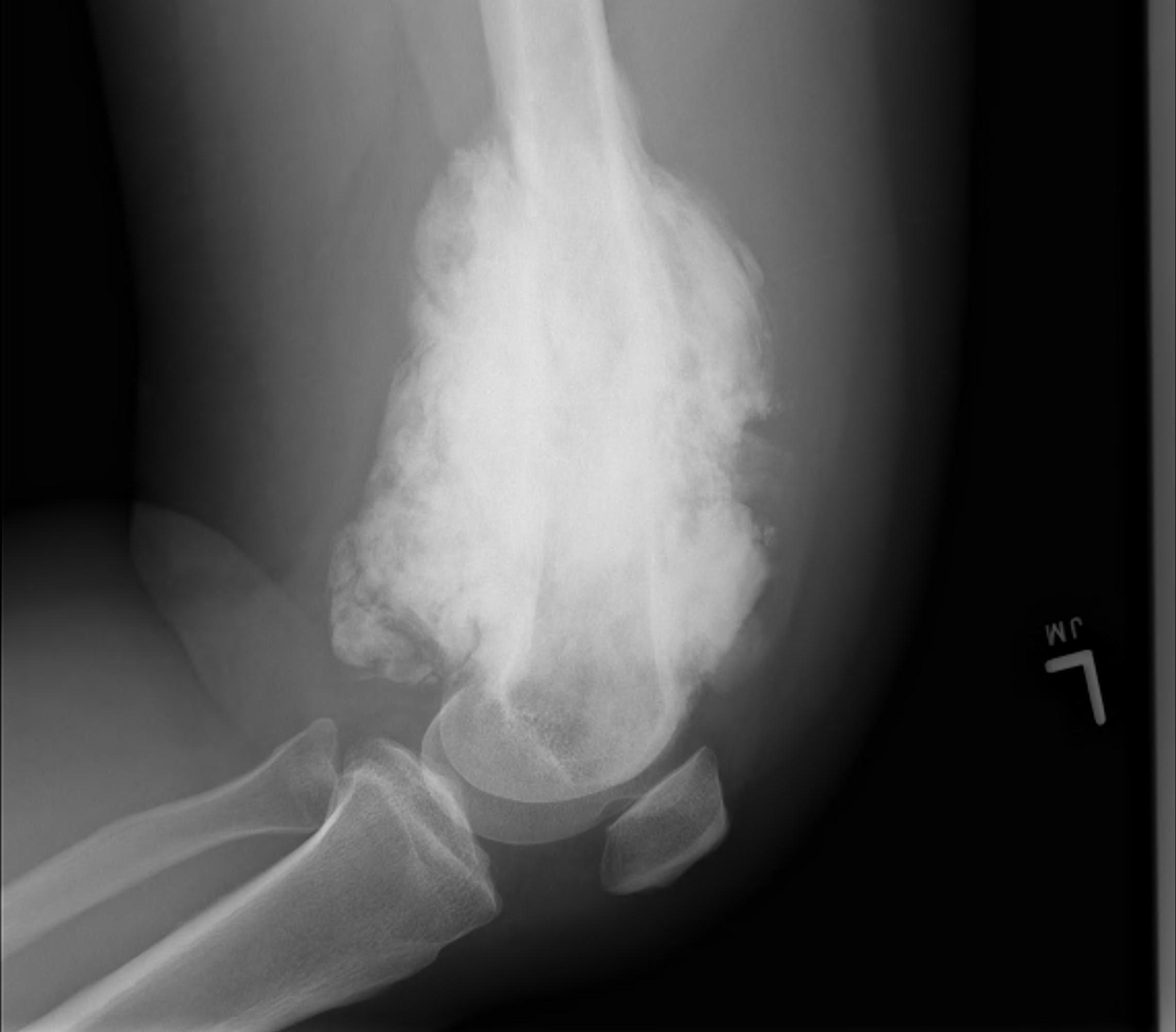
    Osteosarcoma Distal Femur0002Today, May 21st, is a day that is generally difficult for me because it’s the anniversary of the day that I was diagnosed with bone cancer.  And that diagnosis forever changed many aspects of my life.  A diagnosis like this one brings with is a lifetime of having to explain my complex health situation (my ‘pre-existing’ condition). It colors many of my social interactions, it means that I live in a state of simmering concern that the cancer will return.

    It would be two days after my diagnosis that I would learn that my leg would be amputated and that I would be disabled for the remainder of my life. But in some ways that concern was very much on the back burner because what mattered most was that I somehow live long enough to let that matter–to have the problem of actually living with a disability instead of death by cancer being imminent.

    Recently I mentioned to some of my students that I’d had bone cancer as a teen. Their demeanors changed dramatically when they heard that–I could see that even the very word of cancer was an impactful one, and to have ‘lived’ so long since my diagnosis (33 years!), well, that is a powerful thing.

    Perhaps what I think about the most now, as I consider what the next 33 years might bring for me, is how I can maintain the greatest amount of health and mobility for myself as I face the natural declines that come with ageing.  I continue to need good prosthetics and good healthcare in order to live an active life like the one I have now, and that is an expensive prospect.  It also takes a lot of time and commitment to walk well and be strong.  Sometimes I am up for the effort that it takes and sometimes I’m not.  Sometimes I just want to be a couch potato and not have to try so hard every day.

    But I think that is probably what changed the most on that day that I was diagnosed–that day I lost the luxury of laziness.  Since then I’ve had to work very hard to achieve even the basic goals of ambulation and self-sustenance, not to mention the extra energy that it takes to be gainfully employed, intellectually agile and socially engaged.  I don’t necessarily resent or regret it–it is what it is and there is nothing gained by wishing things could be different.  I suspect, too, that much of what I have achieved has come from being forced to be responsible and diligent in so many aspects of my life.  And in that I might even be called fortunate.

    However, even if I realize that it is likely a larger good that this has happened to me (I don’t take even the simplest stroll down the street for granted), today I might indulge in a moment of ‘what if’…and consider what it would have been like to have been able to grow up without the added challenge of bone cancer and the loss of my leg.

    Want to read a few other of my posts written on my cancer-versary? Click below.

    Last year I spent my anniversary #inthegarden
    In 2010 I had a giant fundraiser to buy prosthetics for a Chinese amputee
    My 39th Birthday year
    In 2012 I met up with an old friend in Zurich
    In 2014 I told my daughter the story of my diagnosis


    (image is not of my knee, but shows how osteosarcoma looks in a patient with a similar tumor)

  • Getting healthy, one day at a time

    Getting healthy, one day at a time

    A few years ago I realized that being healthy and strong was critical to my overall well-being.  In fact I began to see that when I was healthy, everything else in my life flowed better.  As a result, each time I sit down to set goals, healthiness is at the top of my list: to walk as well as I can, to do strength training, and to maintain my joint health.

    For me being healthy is also one of my biggest challenges.  Because I’m an amputee I can’t just take up jogging five miles a day, so I find that I have to be a lot more creative in the ways that I exercise.  I also have learned that I can’t do this alone, so I have coaches and friends who keep me motivated to keep at my health routines.

    As of right now, this is my weekly exercise schedule:

    Monday:
    Early Morning, strength training with Coach Sarah
    Evening, gyrotonics with Victoria (at Beau Corps studio)

    Tuesday:
    Rest Day

    Wednesday:
    Early Morning, strength training with Sarah
    Evening, Iyengar yoga with Denise’s Intermediate Class

    Thursday:
    Rest Day

    Friday:
    Early Morning, strength training with Sarah

    Saturday:
    Early Morning, Outrigger Canoeing Team Practice

    Sunday:
    Either a 2-hour yoga workshop or a solo paddle on my canoe

    What I like about this schedule is that it is a good mix of activities that I genuinely enjoy.  And I also like that it is a mix of solo exercise and group/team exercise.  What I don’t like: is that I don’t get ample cardio exercise.  I also feel like I ought to incorporate more stretching into my regular routines, such as a deep stretching/yoga workout on Tues/Thurs mornings.  And I must confess that the first thing to go in this schedule is my Wednesday yoga class–it is so hard to keep that commitment between teaching into the evenings on Tuesday and Thursday (and also one Wednesday per month I am at our South County campus too late in the evening to get to my yoga class).

    I also just feel like overall it’s not enough.  I’m not as tone as I used to be and I definitely get creaky and injured far more easily than I did even five years ago (not to mention having put on 10 pounds that is definitely not muscle).  But I can barely keep up with this routine on top of my work and teaching, so I can’t really imagine adding more (like swimming, I really want to add swimming–but when?).

    I guess I’m curious if any of you can suggest ways that I could squeeze in a bit more exercise here and there, or if you want to share your fitness plans with me, as something I might emulate?

    (Note: photo taken 6 years ago, when my friend Crystal was doodling on my shoulders–that’s not permanent ink…)

  • It’s a Known Issue

    We just barely saw the sun through the clouds  as it slipped into the horizon.
    We just barely saw the sun through the clouds as it slipped into the horizon.

    “I need some ocean air” I texted to him, as I was packing up to leave work.  So I drove towards Newport Beach, picked him up from the office and we pulled a parking spot just as the sun was hovering close on the horizon.  Then we hopped out of the car and headed across the street to the bench where we’ve sat so many times before to watch the setting sun.

    I noticed that when I stepped off of the curb my knee felt a bit stiff, but I ignored that feeling.  I was focused on the sunset and not on my gait.  But then when we were about a foot from our bench, I dropped to the pavement.  My knee had completely given way and had buckled underneath me.

    The jogging couple walking behind us stopped abruptly.

    “Is she okay?” they asked.

    Meanwhile, I was gauging how bad it was.  I’d fallen just as I should.  No obvious scrapes or sore places, although I suspected that I’d torn a hole in my skirt.  And I didn’t want to stand back up immediately, knowing that if I did I would probably fall right back down.

    As the couple from behind us hovered in concern I almost said to them, “It’s a known issue.” But checked myself and said cheerily “No problem, I’m fine!”  And they passed, confused as to why I was still on the ground.

    It happened yesterday, too, this falling–on the blistering hot asphalt of a cafe parking lot, which was really not a very fun place to try to troubleshoot the malfunction.  Because of that I almost headed into the repair shop first thing this morning, knowing that a failing knee wouldn’t be a plus as I navigated my workday.  But the knee acted normally as I tested around the house and in the garden before heading to work.  I figured that the fall yesterday was an odd blip and the quick reboot of the microprocessor that I’d done in the parking lot had resolved the problem.

    But now that it’s happened twice, I’d say that it’s gone from a one-time blip to being a “known issue” that’s got to be escalated to a professional.  Because falling can be risky (and painful) and particularly inopportune if I’m carrying food or my laptop.

    So I’ll get a loaner knee ASAP and send mine back to the factory for service.  And as I do so I will marvel at the fact that I can swap out my knee almost just as easily as I upgraded my iPhone last week, with all of the settings and customizations are preserved “as is” so I can get back to my everyday routine just as soon as possible.

  • 31st anniversary

    Today was the anniversary of the day that I was diagnosed with bone cancer, probably the single worst day of my life.  It’s generally a tough one for me, although some years are better than others.

    Some small pleasures from today:

    • sharing my salmon dinner with Ellycat
    • lighting candles on the fireplace mantle of my new, but still empty, house.  Imagining what it will look like once I get the furniture all moved over
    • teaching a workshop on one of my favorite digital tools, Zotero (because I can wax rhapsodic about the beauty of my footnotes)
    • some of my students dropping by the house, to chat and munch on cookies
    • walking to and from work, with confidence.  Not taking even one single step for granted.  Feeling grateful for mobility and strength.
  • What a difference a day makes…

    It was 30 years ago today that I was diagnosed with bone cancer.  I shared that story with my daughter as I drove her to school this morning, not realizing that I’d never told her before how it happened.

    My life completely changed that day, and in the days that followed.  On the 21st I was diagnosed, on the 22nd I had biopsy surgery, on the 23rd I learned that I would lose my leg, on the 24th I had my first chemo treatment, and on the 25th I celebrated my 13th birthday by sipping 7Up and puking birthday cake in front of friends and family.

    I remain amazed that I am still alive and relatively healthy, three decades later…

  • that time I went to San Francisco…

    I was in SF for an academic conference this weekend.  It was terrific in so many ways, but perhaps mostly so because even though I went up and down many hills, my (bionic) knee never once balked or stuttered at the change in incline.  That’s a welcome first.IMG_5348

  • my cyborg form

    This video shows a team of designers rebuilding clothing mannequins to resemble differently-abled bodies.  It’s a moving story, well-worth the few minutes it will take to watch it.

    For me, this video highlighted the oddness that I sometimes feel when techs are building the “cosmesis” of my prosthetic leg–the sculpted form that creates the structure to give my metal innards a symmetrical form.  They trace my organic leg and then shape firm foam into a matching shape, shaving it down a bit here and there to make it look proportional, and then we test it under clothing to ensure that the fabric flows smoothly and doesn’t bunch up around the knee or gather in odd ways at the hip or crotch.  In this process they build me a cosmetic leg with all of the requisite properties of leg-ness, despite it being a completely function-less addition to my body.

    Due to still being in a phase where my new prothesis is being adjusted often (like today, it’s just started making a clanking noise as I walk around corners–time to go back in and figure out what’s going wrong), I’m not wearing any cosmesis at all.  The asymmetry between my legs makes most clothing looks a bit strange, such as when the right pantleg of my wool trousers flaps back and forth in the wind as I walk across campus, or when I am sitting in a meeting and my right knee comes to an obvious narrow point instead of being neatly rounded like my organic leg.

    And while I think my bionic parts are uber-cool looking, at work I rarely wear short skirts or other clothing that shows my metal innards.  Because it’s so much easier to “pass” than to have my body be a spectacle to passersby (or colleagues or students).  I’m not at all embarrassed of being cyborg, but it adds a layer of inconvenience to my interactions that I prefer not to introduce in my professional setting.

    But on the weekends, it’s a different story.  Then I wear short skirts and sandals and enjoy letting my robot hang out there for anyone to see.

    shadow, at the beach
    shadow, at the beach


  • just one step at at time…

    When we went out shoe shopping recently, Catgirl and I took a rather odd detour from the parking structure to the shopping plaza.  We went up the stairs and then up and down the wheelchair ramps twice.

    You walk so fast now, she said.

    A few weeks into wearing my new Plie 2.0 robotic leg and I am, indeed, a faster walker than before.  Particularly downhill–the mechanics and control algorithm for this new leg making downhills so smooth (c-legs, on the other hand, are pretty choppy on the downhill).

    In addition to wearing the new knee, I’m also wearing a Fitbit device to mark my number of steps and activity level.  My graph over the past two weeks shows some pretty dramatic changes from where I was several months ago (my daily step average increasing from 3483 to 4819 since August):

    Screen shot 2013-10-25 at 3.06.28 PM

    I’ve noticed only one small glitch with the new knee and that’s that when I have a long stretch of evenly-paced steps, after a few hundred paces it will hiccup a bit and I’ll end up dragging my toe for one step.  I imagine that this is some kind of firmware bug that can be ironed out.  But it’s a small glitch, and certainly livable except that it tends to affect my full trust of the limb (for the few steps after each hiccup I find myself reticent to put my full weight into a step).

    Overall, the new knee technology is even better than I imagined. I still limp and I’m not (yet) running hurdles, but it’s a dramatic improvement over what I had before (yay, technology).


  • There’s no word for it…

    When I was diagnosed with bone cancer, the weight of that word meant many things: I had some sense that I would lose my hair, that I would become thin, that I would be fighting for my life.  I knew all of that because my disease had a name, albeit a frightening one (oh, and how glad I am that google did not exist then to tell me just how frightening a bout of bone cancer might be)….

    So this article from the NYTimes highlights Ugandan women who have breast cancer and don’t even have a name for their condition in their language, caused me to wonder what it would be like to be diagnosed with a life-threatening ailment which carried no meaning, no cultural baggage, and no fears (a la Susan Sontag). I suspect that I would not have followed through with the treatment had I not been more afraid of dying of cancer than I was of chemo.

    Related to that, is a book that I picked up yesterday called Improvising Medicine, about the cancer epidemic in Botswana.  What connects these research pieces is that there is currently a surge of cancer in Africa and its unknown whether this is due to an actual increase in the disease or an increase in diagnosis rates.  And, although I haven’t yet begun reading Livingston’s book, the summary tells me that, like the NYTimes article, it addresses many of the socioeconomic challenges of treating a disease in communities without sophisticated medical care options.

    Perhaps a book that will hit a bit closer to home for me is a new release from UCPress, Malignant: How Cancer Becomes Us, which combines cultural analysis and memoir in addressing the complex social nature of this disease in the United States.  The summary says, “Jain explains how a national culture that simultaneously aims to deny, profit from, and cure cancer entraps us in a state of paradox—one that makes the world of cancer virtually impossible to navigate for doctors, patients, caretakers, and policy makers alike.”  Indeed, my experience is that treatment for cancer now hinges so much on what type of health insurance one has and the process of “shopping” for a doctor who will tell you what you want to hear, which seems a wrongheaded approach to a cure.

    Even though thirty years have now passed since I first heard that dreadful cancer word spoken in connection with the symptoms of my own body, I still find it difficult to comprehend the life-changing event that was my diagnosis and treatment for osteosarcoma.  As I look back on what I went through then, it remains a kind of encapsulated moment that is hard for me to connect with now.  But what I remember most significantly, was the feeling that the temporary horror of my cancer treatments was worthwhile to endure because of the possibility of eradicating my disease, and I trusted that my doctors were giving me the treatments that would increase my odds for survival.  I suspect, now, that my faith in my doctors was naive, as was my willingness to endure mutagenic treatments.  And if I had not lived in a society where I was told that it was my (heroic) responsibility to “fight” and “kill” that cancer, I am quite sure that I would not have consented to the amputation of my leg and the months of high-dose chemotherapy treatments afterwards.  Of course, with 30 years of hindsight it seems to have been a wise choice.  But I can’t help but wonder how differently my experience would have played out if I hadn’t been part of a community that encouraged, even championed, a specific behavior for me as a “victim” of cancer.