Category: school

  • legacy bio, or what happens when you log in to blogger.com after more than 10 years…

    legacy bio, or what happens when you log in to blogger.com after more than 10 years…

    Screen Shot 2017-02-07 at 1.48.43 PMRecently I logged into blogger.com while I was teaching a workshop, and when I did so my legacy bio from 2005 popped up onto the screen in front of the audience.  It was a bit embarrassing to see my just-barely-in-grad-school self on that big screen and to realize just how much time has passed in the interim.  I don’t live with any of those people anymore (I’m over 6 years divorced from John and the kiddos both live in their own apartments in different cities from me) and I’ve long since finished my Ph.D.  While I still enjoy my afternoon cuppa and I do spend a lot of my discretionary time gardening, I rarely define myself by those hobbies.  Of course I am still a cancer survivor and I am still am amputee, but I would probably not advertise those aspects of myself in front of an audience while I was speaking on a professional topic.

    This is a pretty good example of how the internet doesn’t forget much, despite the fact that I’ve rather strategically moved my URLs around enough that my decades-ago blogwriting is not so easily discoverable.  It still happens often that near-strangers will mention to me that “they’ve been reading my blog…” and I am left feeling like I’ve just left my junior high school diary open on a park bench.

    So perhaps this is the perfect segue to an announcement about the talk that I’ll be giving at my alma mater on March 1st.  It will be an opportunity to reminisce a bit about my life as a blogger along with my colleague Jeff Wasserstrom.  If you’re interested in hearing some of my stories (including, perhaps, how it felt to have my decades-old blogger bio pop up in my workshop last week), please consider yourself invited to join in!

    (And it is not without a large feeling of fondness that I note the location of this event is one of my former favorite UCI study haunts, which is now named after my best-ever UCI Bio prof). 

    Screen Shot 2017-02-07 at 1.58.32 PM


  • She was told never to do these 5 things while she was getting a PhD in History, but she did them anyways. Click here to see what happened.

    This list of links is for a round table that I’m participating in at the #WAWH conference this afternoon about writing online as a graduate student. So to mix things up a but I thought I’d try a bit of upworthy-style academic clickbait (instead of a PowerPoint)…

    1) blog everyday

    Confessions of a blogger historian

    The blogging life

    2) get personal

    My bio

    Writing about disability and religion and divorce and family (and poetry and flowers…)

    3) get distracted by side projects

    Technological tools for historians

    The Making History Podcast

    4) tweet at and about academic conferences

    Getting Twitterpated at academic conferences

    The Past’s Digital Presence Conference twitter feed

    5) accept a FT alt-ac position instead of ‘going on the market’

    Moving from a virtual space to an academic office space

    Ten things I’ve learned from being a university administrator

  • but there’s a lot of math…

    Screen shot 2014-02-27 at 11.37.56 AM

    In a recent casual conversation with a friend, when I expressed interest in studying a particular topic, his reply was:

    “But there’s a lot of math…”

    And I realized that this reply was intended to tell me (a hapless not-mathematical female) that this would not be a topic of interest to me.  It’s quite possible that he was right, but it got me thinking about math and my own personal math-history.

    When I was in 5th grade I received a C- in Math on my report card.  My parents were shocked and angry, as was I.  It turns out, it was a typo and my grade was a B (whew), but it scarred me for a long time–because I felt insecure in a numbers world and at some level I thought that I probably did deserve that lower grade.

    My undergraduate degree in Biology required two years of Calculus, which was torture for me, as had been my years of high school math (the only exception: geometry–I loved writing proofs).  I suspect that my aversion to math was a combination of two things:  sheer hatred for rote homework problems and some lingering cognitive issues caused from the chemotherapy that I’d undergone just prior to high school.  To pass my Calculus courses I ended up memorizing the problem sets for the exams, because I could not grasp the concepts.  I’m still disappointed in myself for doing that, but I was so desperate to graduate…

    And then I didn’t think much about math again (other than simple household calculations like doubling recipes and measuring fabric) for more than a decade.

    And then I took the GRE for graduate school, without even reviewing the math portion, knowing that it didn’t “count” for someone entering the Humanities.

    And then I got a higher score on the math section of the GRE than I did on the Verbal section.

    Huh?

    And since then I’ve come to realize the elegance of numbers, and to learn that I’m actually pretty good at math.  For me, quantitative data is slowly edging out my attraction to qualitative, which is certainly why I’m so drawn to the digital humanities, which tend to combine both approaches to research questions.  Numbers, number patterns, number visualizations…they all fascinate me (and statistics–I love statistics!).  They aren’t a chore, they don’t swim around meaninglessly in my mind.  Instead, they have a beauty and an order that is quite appealing.

    And…I suspect that if I were to do things over and be back in my undergraduate years again, that those Calculus classes would hold attraction for me.  Perhaps they would even be fun.


  • Historians as Project Managers

    Historians as Project Managers

    “Students in history [must] learn techniques of project management” because of the growing need for collaboration on “Big History” projects, says James Herbert in the most recent issue of Perspectives (the magazine of the American Historical Society), in an article titled “Professions and Publics.”  Herbert is paraphrasing the words of author James Cortada, who writes about the ways that historian need to change their research practices in his recent book History Hunting: A Guide for Fellow Adventurers.

    It would be nice to see those skills incorporated into graduate school, but I can hardly imagine such a sea-change occurring anywhere but at the most innovative of institutions, where staff support, in the form of technologists and project managers, is available to graduate students.  Off the top of my head, I can only think of two (well-heeled) programs that might have such resources allocated to their graduate students.  Few (too few) even have technical support for faculty, much less their students.

    I haven’t yet read Cortada’s book, so perhaps it’s premature for me to offer my concerns about the practicality of his suggestions.  However, I’m looking forward to reading it to see what concrete ideas he offers about how this change in curriculum might fit into the training of students at non-elite universities.


  • 2012 Retrospective #3 (finishing)

    2012 Retrospective #3 (finishing)

    The next installment on my 2012 Retrospective series:

    Finishing my PhD meant the end of a lifetime school career.  With the exception of a few months between the births of my two kids, I was a student my entire adult life.  Until June 2012.

    I’m still grappling with the loss of the “student” discounts for movies and museums and so many other things…

    This resulted in an identity shift that’s much larger than putting aside the laminated student ID card that I carried in my wallet everyday.  Not being a student somehow means that I’m a grown-up now, in a way that I wasn’t before.  It gives a feeling of no longer being “in progress” but of having reached an endpoint of a journey.  There’s something in my soul that has had a hard time accepting that feeling and figuring out what’s next.

  • Changing my c.v. to a resume for #alt-ac job applications

    Changing my c.v. to a resume for #alt-ac job applications

    When I began applying for alt-ac positions instead of traditional faculty jobs, I soon realized that most of these jobs asked for a resume rather than a c.v.  Given the variety in the ways that anyone structures their resumes and vitae, it was hard to know exactly how to make the changes to mine to reflect the expected differences between the two types of documents.  Moreover, I’ve learned in the meantime that I’m not the only one with this problem!  So I’m posting my c.v. and resume here as a sample for others who are applying for alt-ac careers, and welcome any feedback you might have on these or any examples in this vein that you would like to share.

    First, here is my current c.v. [PDF]

    You’ll see that I keep the formatting quite simple, with the following categories:

    Current Position
    Education
    Teaching Areas
    Dissertation
    Articles and Book Chapters
    Notable Online Publications
    Awards, Fellowships
    Talks & Presentations
    Professional Activities

    Even from these categories it might be obvious that I’m a non-traditional scholar–because of the unusual category of “Notable Online Publications.” I felt that it was important to have a place to mark my online work as well as my publication in print formats, so I chose to add this section to my c.v.

    And now, here is my current resume [PDF], which I’ve used in applying for positions that are “alternative” to a traditional tenure-teaching path.

    This is a much shorter document, and focuses on experience and skills rather than on awards and publications.  It has the following categories, with the strongest emphasis being on my Technical Skills and on my work in the Digital Humanities:

    Current Position
    Education
    Technical Skills
    Recent Talks about Digital Humanities
    Selected Professional Activities

    One peculiarity on my resume is a lack of an employment history other than my current position.  This is because I’ve had very little paid employment outside of my work as a TA or tutor.  Generally this comes up in job interviews and I explain about being in graduate school and point to the various non-paying projects, such as hosting a podcast and serving on conference committees, that gave me important skills.  Because I’ve only applied to jobs within the academy, this lack of employment history has not seemed to be much of a barrier.  However, I suspect that if I were seeking employment in the “industry,” I might encounter more difficulties with not having had much work experience.

    In addition to both of these documents, I also maintain an online portfolio at my janaremy.com domain name.  This site breaks down some elements of my resume into more detailed categories and also offers hyperlinks to the various projects, conferences, and activities that I mention on my c.v.  Though I don’t track my website analytics closely enough to know how often this has been consulted by hiring committees, I do get a few dozen hits on these pages on any given week, so it seems worth keeping this section of my portfolio updated regularly.

    Screenshot showing the dropdown menu on my website.

    Being still in the early stage of my career, I offer these examples with the caveat that they’ve been successful for me so far, but that I’m far from being an expert on what hiring committees are seeking from their applicants.  And, I welcome links to your vitae and resumes in the comments below this post, as well as any feedback on my documents that you can offer.

  • a decade ago

    a decade ago

    Ten years ago I’d just started on the path back to school, enrolling in three undergraduate classes at UCI with the intention of eventually applying to graduate school.  Here’s my blogpost about that on my old old blog at enivri.com (courtesy of the wayback machine)…

  • Teachable

    Teachable

    Why, yes, I did hold one of my classes at the Orange train station.  Trains + teaching + awesome students = WIN!  :)

    It also helped that we were discussing the impact of the trans-continental railroad on the environment of the American West as the trains were whooshing past us on the tracks.

  • What I got out of THATCampSoCal 2012

    What I got out of THATCampSoCal 2012

    I’ve attended more THATCamps than I can keep track of now.  THATCamp Prime and THATCampBayArea and THATCampSoCal are standard annual events for me, with a few others working out in conjunction with other conferences that I attend along the way.  I’m used to the drill of TC and as a result I’ve even begun to wonder whether the familiarity of the unconference experience meant a loss of use-value for me.  You see, I easily become weary of the conversations about the abysmal academic market or the lack of funding for graduate student projects or the lack of women in tech-fields.  Not to say that these aren’t important conversations, I just don’t enjoy the repetition very much–I want to start the revolution, not just talk about what needs changing.

    And while there was some repetition of some of those typical conversations at this THATCamp, I found it to to still be quite useful for me, and this is why:

    • in the session about local DH collaboration, most of us who attended had been at the very first THATCampSoCal three years ago and had been involved in various local initiatives since then, including the now mostly-defunct DHSoCal website.  We committed to updating the DHSoCal presence that we created so many years ago by migrating our activities to newer platforms like Google Hangouts and Twitter.  This session had a very proactive feel to it and revved my enthusiasm for cross-campus collaborations.
    • those of us who met to discuss the role of Academic Technology at our campuses share many of the same problems with encouraging technology use.  The wide variety of suggestions for doing more (and doing better) made me feel good about what I have tried, as well as hopeful about future possibilities.  The take-away message for me personally was the reminder that I need to listen to the various constituents on campus more, and consider their needs before I push the latest shiny-new tech-tools.  Though this might not be true at every institution, at mine I believe that helping faculty to use a few tools very successfully is better than offering them with so many possibilities that they feel frustrated.
    • And finally, what will probably be the very-most-important thing that emerged from my experience at THATCamp was the faculty-friend who sat me down and asked about the state of my career and then nudged me to do more publishing (knowing that I desperately need this for my cv).  Actually, she didn’t just nudge me, she sent me her recent book proposal as a model and helped me to frame some rough ideas for how I could draft my own and then encouraged me to do so.

    All of these bullet points have one thing in common, and that’s the value of attending a conference where others are invested in the DH community and are excited about sharing with they know with others.  There’s a generosity at THATCamp conferences that is above and beyond what I’ve experienced at other academic venues.  Attending this event today reminded me just how much I need the mentoring and examples of other scholars in this field, and also affirmed my hope that I can offer the same to others, too.


  • how long…

    how long…

    This past weekend was wonderful.  I got to spend time paddling, with friends, and getting caught up on home things (i.e. laundry and packing).  But mostly, I spent time with the kiddos.

    We cooked all of our meals together (I’m giving them basic cooking lessons as a prep for their soon-to-be living on their own), watched movies, and just talked.  And talked.  We ate our meals on the back porch surrounded by the bird chatter (I loved that moment that GameBoy looked up into the trees and exclaimed “There are a lot of birds up there!”  And maybe finally understood why I like taking my morning coffee and afternoon tea out on the deck).

    As the weekend came to an end we were up late talking once again and I told them what a wonderful time it had been.  I asked them if they noticed how different this weekend was from the other ones that we’ve had together the past few months.  And for a moment they thought about it but didn’t grasp what made this one so special.  Then I reminded them that it was our first weekend together since I’d graduated, and recounted just how stressful my weekends had been in my final push to finish writing my dissertation.

    Then Catgirl asked, “Mom, how long has it been since you’ve been doing schoolwork on your weekends?”

    “Ten years.”

    (she was five then)

  • Jana, PhD

    Jana, PhD

    Yesterday I finished those last final steps to doctorhood.  Afterwards it was more than surreal to walk out of the Administration Building and across the quad, recalling the time just over 20 years ago that I first walked across that same space…at the beginning of my freshman year at UCI.   So today when I walk across the stage to be hooded by my adviser, it will be the close of a long and circuitous journey that began in 1989 when I aimed to become a physician because of my medical history, and ended when I became a professional historian who researches the history of medicine.

    Being a doctor doesn’t make me feel any smarter or more worthy.  Instead, it’s a testament to the fact that I persisted and knew when to call something “good enough” to be finished (after 35 years of school, one would think that it was definitely time).

    As I thought about all that’s happened to bring me to this point in my life, one small story from nearly three decades ago stood out in my mind.  I was 13 and was nearing the end of my chemotherapy treatments for bone cancer.  There were warnings given to me and my parents that the treatments would have cognitive side-effects, including memory loss.

    Yet that spring, as an ailing 8th-grade cancer patient wearing a wig and walking on crutches, I won my school spelling bee.  I then went on to the district level and won that match, and moved on to the state championships.

    The details of that experience are dim in my mind now.  I would imagine that it must have been tedious for the audience to watch me stand up and use crutches to walk to the microphone each time I had to spell a word.  Or perhaps the judges allowed me to remain seated for the competitions because of my limited mobility?  I don’t remember.

    But even though the details are fuzzy, the thought that keeps bubbling up about that moment now, is one of persistence.  I just kept at it.  Kept doing my best at spelling each word slowly into the microphone whenever it was my turn.  I wasn’t thinking too hard about what I was doing, I was just doing it.  I didn’t let the doctors’ predictions or my own self-consciousness at being a one-legged-and-bald teenager bother me.  I just spelled.

    Today I’ve got the urge to take that fragile-yet-determined 13 year-old me in my arms and tell her a few things…

    I want to let her know that someday she’ll be walking confidently across a stage to earn another award because she worked hard at something, and kept at it even in complicated circumstances.  I want to tell her that she will be rejected the first time she applies for graduate school, and will be rejected from most schools the second time–but what matters most is that she found one match among the many attempts.  I want to tell her that during her years of coursework she will sleep less than those years when she was caring for a newborn, but that she ought to get up when that alarm rings anyways.  I want to warn her about how tough it will be to TA and tutor and do odd jobs to pay her tuition, but remind her that she can do it even while keeping things balanced with mothering and gardening and researching.  And I’ll tell her that when she does have funding she ought to make sure to work and write everyday, that it’s a luxury she can’t take for granted. I want to explain to her that getting your PhD isn’t about doing things perfectly–often it’s about doing things as good as you can while facing down the fear of failure (oh, comprehensive oral exams, I am looking at you right now). I’ll leave some of the hardest parts out–about the drug-resistant infection that would persist for so many months that there were fears of losing her other leg and about the unraveling of her marriage. Instead, I’ll remind her that she will find true friends to support her through the long dark nights ahead, and remind her that there will always be roses (and roses and more roses).

    Most importantly, I will tell her that by the time she’s earned the PhD she’ll be stronger than she’s ever been before, more satisfied with her life than she could have ever imagined, and more sure that there are great things ahead if she’s willing to just keep at it, everyday.

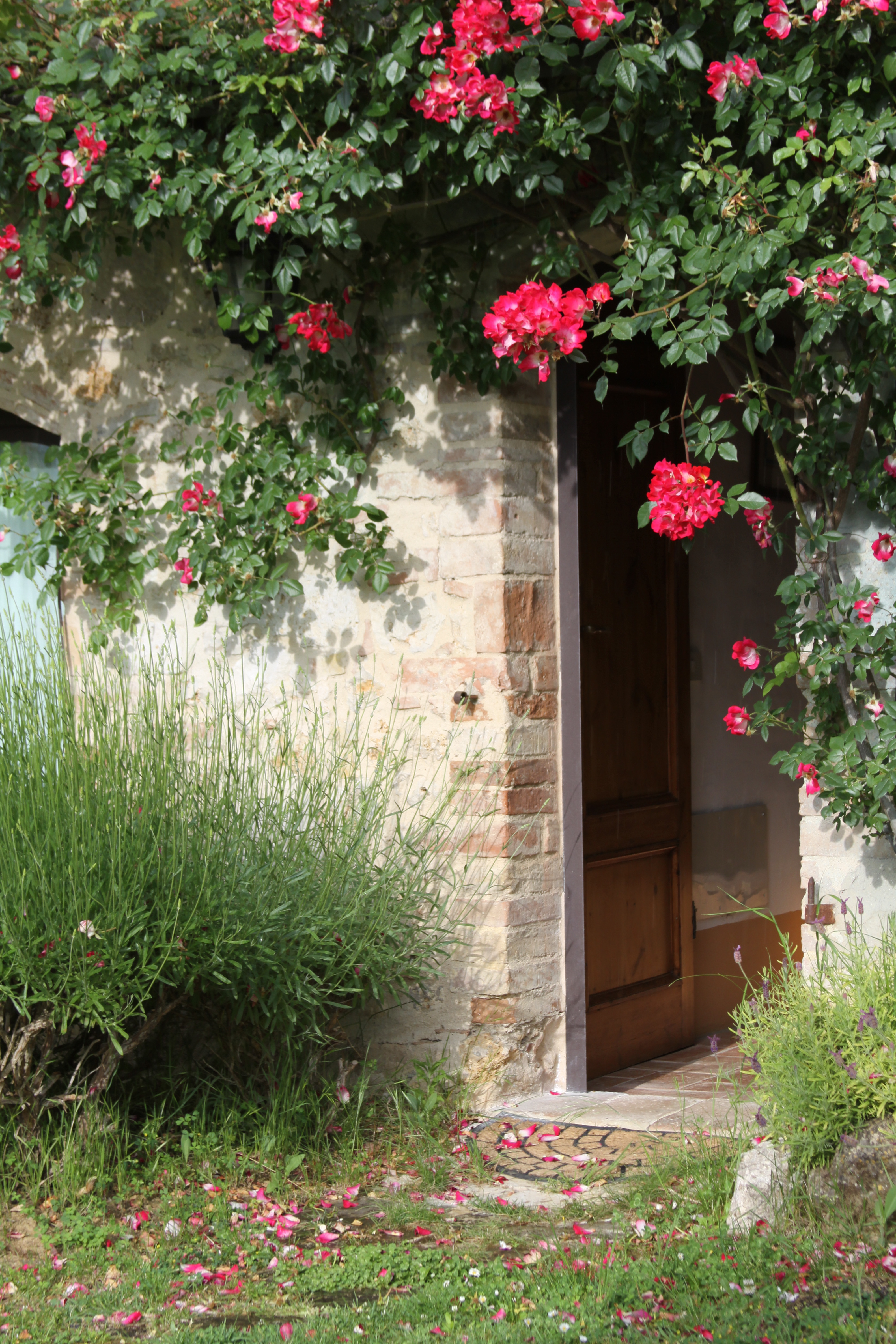
    *Photo is from my recent visit to Tuscany, where we stayed in a villa with so many blooming roses that their petals lined every pathway. 


  • dedication

    dedication

    I was filling in the template for my dissertation file last night.  As I typed up the dedication page, I was pretty humbled by all of the people that I wanted to name–those who listened and read and helped and were just there when I needed them. (really friends, you are amazing and I owe you so much…)

    But as I thought about what it meant to me to do this degree and how it impacted the lives of the people around me, I realized that getting a Ph.D. is probably the single most selfish thing that I’ve ever done.  I did this for me.  Not for my kids or for the money or for my parents or for god.

    For.  me.